
Bald-Faced Hornets
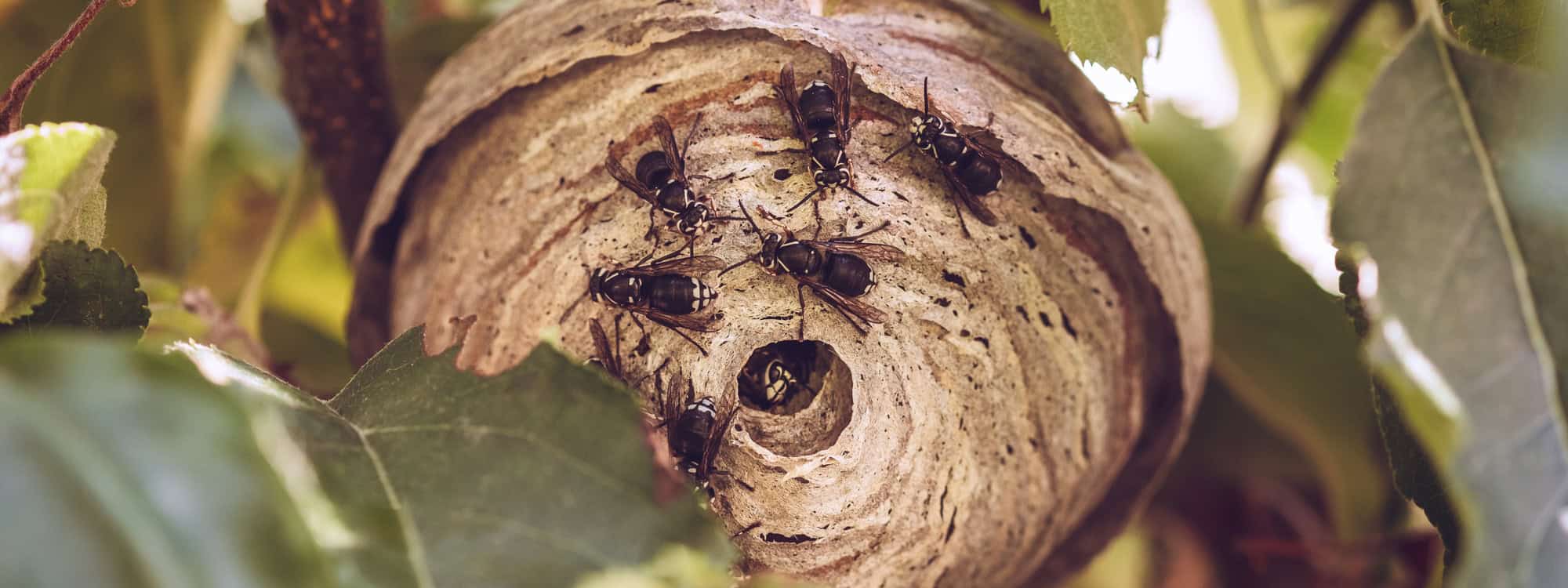
Identification: Bald-faced hornets, commonly found in Muskoka, are easily identifiable by their striking black and white coloration. They typically measure between 12 to 20 mm in length and have a robust, elongated body with distinct white markings on their faces, thoraxes, and the tips of their abdomens. Unlike true hornets, Bald-faced hornets are actually a type of wasp and possess a more slender build and longer legs that dangle during flight.
Habitat: In Muskoka, Bald-faced hornets favor building their nests in elevated, sheltered locations such as tree branches, shrubs, and the eaves of buildings. Their nests are large, paper-like structures created from chewed wood fibers mixed with saliva, often shaped like an upside-down teardrop. These nests can contain hundreds of individuals and are usually found in areas with sufficient vegetation and minimal disturbance, making them a common sight in gardens and wooded areas.
Diet: Bald-faced hornets are omnivorous, primarily feeding on nectar and sugary substances from flowers. They are also known for their predatory behavior, hunting and consuming other insects, including flies and caterpillars, which they bring back to their nests to feed their larvae. This diet makes them beneficial for controlling pest populations, but their scavenging tendencies can lead them to human food sources, particularly during late summer.
Behavior: Bald-faced hornets exhibit a highly social structure within their colonies, which typically consists of a queen, workers, and drones. They are known for their defensive behavior and will aggressively protect their nests if threatened. Unlike some other wasps, Bald-faced hornets are more likely to sting when provoked, making it important to exercise caution around their nests. They communicate through pheromones and body movements to coordinate foraging and defense strategies, playing a crucial role in the colony’s survival.
Prevention: Preventing Bald-faced hornet infestations requires proactive measures. Regular inspections of your property for potential nesting sites, especially during the early spring, can help mitigate the risk of infestations. It’s important to keep outdoor eating areas clean and free of food debris, as this attracts scavenging wasps. Bug Free Muskoka’s General Pest Control Service offers a comprehensive solution by creating a protective barrier around your home, targeting potential nesting areas and entry points to effectively deter these wasps.
Control: Managing Bald-faced hornets involves careful identification and removal of their nests, which should ideally be done at dusk or dawn when they are less active. Using insecticidal sprays specifically designed for wasps can help eliminate nests safely from a distance. Regular property inspections and early intervention are key to preventing infestations. For larger nests or if safety is a concern, it’s advisable to consult with Bug Free Muskoka for effective removal.
If you are dealing with Bald-faced hornets, Bug Free Muskoka provides a proactive General Pest Control Service designed to protect your home from these pests. This service includes a comprehensive four-layer treatment applied around the exterior, creating a shield against potential infestations. By targeting common nesting sites and entry points, Bug Free Muskoka helps ensure a safe and enjoyable outdoor environment, allowing homeowners to relax without the worry of wasp encounters.